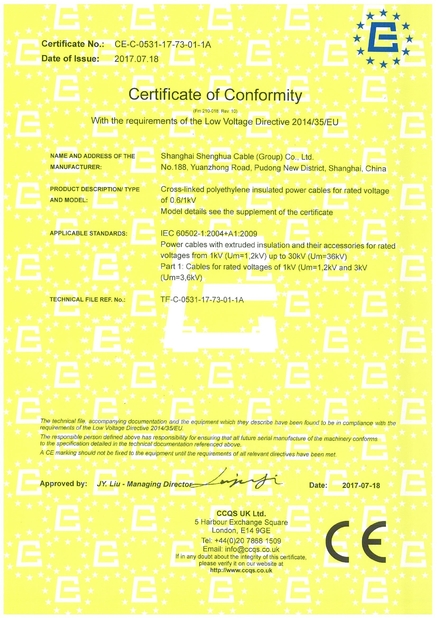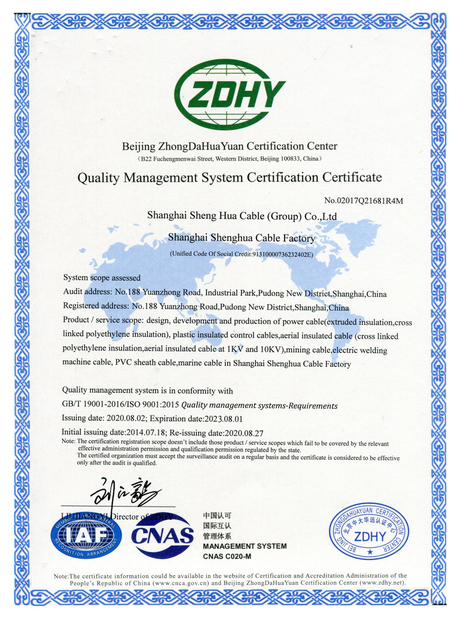
Cavo di Shanghai Shenghua (gruppo) Co., srl.
Anti-termite cable is specified far less often than it should be, and the omission shows up as unexplained insulation failures in buried and ducted routes across Africa, South East Asia, Australia and parts of Latin America. Termites and rodents do not eat copper, but they excavate through PVC sheaths to reach the warm cavity inside, and every hole becomes a water path and an earth fault. This guide explains how termite and rodent damage actually occurs, which constructions genuinely resist it, how nylon sheaths, steel tape armour and hard outer layers compare, and how to specify and install a buried route that survives twenty years. It closes with six answers on testing, chemical additives and the difference between termite and rodent protection.

Subterranean termites build galleries through soil and will attack anything that obstructs a tunnel, including a cable sheath. The damage is not chewing in the sense of a rodent bite; it is progressive excavation, often at a single point, until the insulation is breached. Rodents, by contrast, gnaw to wear down continuously growing incisors, and a cable in a wall cavity or a farm building is a convenient object to gnaw. Both produce small openings that are invisible from the surface and both are followed by moisture ingress, corrosion of any metallic layer and eventually a breakdown.
Four protection strategies exist, and they are usually combined:
| Protection | Termite | Rodent | Notes |
|---|---|---|---|
| Standard PVC sheath | Poor | Poor | Common failure in tropical burial |
| Nylon outer sheath | Good | Good | Hard surface resists gnawing |
| Steel tape armour | Very good | Very good | Metallic barrier, also mechanical |
| Steel wire armour | Very good | Very good | Higher mechanical strength |
| Chemical additive | Variable | Variable | Regulation dependent, not a barrier |
| Sand bedding and slab | Good | Moderate | Depends on consistent installation |
The distinction between termite resistance and rodent resistance matters commercially. A cable marketed as anti-termite may rely on a chemical additive that does nothing against a rat, while a nylon sheathed cable protects against both through physical hardness. Buyers should ask which mechanism is being offered, not only which word appears in the brochure.
Termite and rodent damage is expensive for three reasons that compound each other: it is invisible, it is progressive, and it is almost always found at the least convenient time.
1. Invisible until it rains. A small breach in the sheath does not affect insulation resistance immediately. Water enters during the wet season, the insulation resistance falls, the protective device operates, and the fault appears hundreds of metres from the actual damage. Finding it requires cable tracing equipment and excavation, and the repair is usually a joint in a location that was never designed to have one.
2. Repeated failure in the same soil. A route that has been attacked once will be attacked again, because the termite colony remains. Replacing a cable with the same standard PVC construction guarantees a repeat failure within a few years, and each cycle costs excavation, jointing and outage time. The correct action is to change the construction, not just replace the drum.
3. Agricultural and rural exposure. Farm buildings, irrigation pumps, rural feeders and telecom routes are the classic locations, and they are also the places where maintenance resources are thinnest. A failure in a remote pump feeder may take days to locate and repair, with direct consequences for production or for water supply.
4. Metallic layer corrosion after attack. Once a sheath is breached, water reaches the armour and the corrosion rate accelerates dramatically. A cable that was mechanically sound becomes structurally weak at exactly the point where it is most highly stressed, and the eventual failure may be mechanical rather than electrical.
5. Insurance and liability. Where a fault is traced to rodent damage and the specification did not require protection, the discussion turns to responsibility. Specifying a protected construction converts a potential dispute into a documented design decision, which is worth more than the material premium in most projects.
Start with the geography. If the project is in a known termite zone, or if the route passes through agricultural land, bush or forest, assume attack is likely and specify physical protection rather than chemical. If the route is in a building, in a wall cavity or in a plant room with food waste nearby, rodent protection is the priority. Many projects need both, which usually means a nylon outer sheath over an armoured construction.
Write the requirement as a construction, not a claim. State the outer sheath material and thickness, the armour type, and the standard or test method that demonstrates resistance. For nylon sheathed cable, state the sheath grade and the minimum thickness. For armoured cable, state whether the armour is steel tape or steel wire, whether it is galvanised, and whether an inner sheath is required between armour and oversheath. Add the installation requirement: sand bedding free of sharp stones, depth as specified, warning tape and, where risk is high, a concrete slab or a conduit.
Installation is where most protection is lost. A protected cable laid on rubble punctures its own oversheath during backfill, and the protection is defeated at the moment of installation. Sand bedding, care with machinery and a post-lay insulation resistance test are essential. Where a cable enters a building, seal the entry: a gap around a cable is an invitation to rodents and a water path in the wet season.
Finally, plan inspection. A megger test at commissioning and annually thereafter gives a trend, and a falling insulation resistance in a protected route usually indicates physical damage rather than ageing. Record the values per route section so that the trend can be located, not just observed. Where a fault is found, inspect the surrounding cable for further breaches before making the repair, because termite attack is rarely limited to one point.
| Situation | Recommended construction | Installation requirement |
|---|---|---|
| Termite zone, buried feeder | Nylon sheath over steel tape armour | Sand bedding, warning tape |
| Rodent risk in building | Nylon or armoured sheath | Sealed entries, no cavities |
| Agricultural pump feeder | Steel wire armoured, hard oversheath | Depth plus slab where practical |
| Duct route in affected soil | Armoured cable inside sealed duct | Sealed duct ends |
| Retrofit of attacked route | Upgrade construction, not repeat | Inspect adjacent cable |
Typical armoured constructions that provide this protection include the 2 core 240 mm2 armoured XLPE power cable 0.6/1 kV, the XLPE insulated PVC sheathed 185 mm2 three core armoured cable, and the 8.7/15 kV steel tape armoured cable with PVC inner sheath for medium voltage routes. For waterproof buried duty the waterproof armoured and unarmoured PVC and XLPE cable combines moisture and mechanical protection, and where fire resistance is also required the armoured fire resistant XLPE cable with aluminium conductor is used. Outdoor single core routes can use the 33 kV outdoor armoured single core cable, and multi-core buried distribution the 3x10mm2 three phase copper cable where mechanical protection comes from a duct.
Termite resistance is difficult to prove with a simple factory test, which is why buyers should look for the mechanism rather than the certificate. Nylon sheath performance can be verified by material grade, thickness measurement and a mechanical puncture or abrasion test on the finished cable. Armour protection is verified by construction: tape thickness, wire diameter, galvanising class and the presence of a bedding layer between armour and oversheath. Chemical additives are the hardest to verify, since effectiveness depends on soil species and concentration, and a laboratory test on one termite species does not guarantee performance against another.
A practical specification therefore states the barrier layer, its dimension and the relevant test, and treats any chemical claim as supplementary. That approach allows a factory to be audited against a drawing instead of against an adjective, and it gives the buyer a defensible basis if a route fails within the warranty period.
When a buried route has already failed twice, the cheapest permanent solution is usually to change the environment as well as the cable. Options include pulling an armoured cable into the existing duct if the duct is intact, installing a new protected cable in a sealed duct or heavy conduit, or where neither is possible, laying a concrete or sand barrier above the cable to interrupt the termite path. Each option changes the failure probability rather than merely restoring the previous condition, which is the key point: a repair that reproduces the original design reproduces the original failure.
Document the change. A short note in the maintenance record explaining why the construction was upgraded, with the new cable type and the installation method, prevents a future team from reverting to the cheaper product during an extension. Maintenance history is the only thing that stops a known bad design from being repeated, and it costs a paragraph to write.
One commercial detail is worth stating in the enquiry. Armoured and nylon sheathed constructions change the drum weight and the drum length, and a protected cable of the same cross section is stiffer, so the minimum bending radius increases. On a congested route with tight bends this can force a change of cross section or an additional draw pit. Buyers who compare only the price per metre of the protected and unprotected options miss the installation cost difference, which on a short urban route can exceed the material premium. Asking the factory for the bending radius and the drum schedule at the quotation stage keeps the comparison honest and avoids a surprise on site.
Steel tape or steel wire armour is an effective barrier because termites cannot penetrate metal. It also provides mechanical protection against stones and future excavation.
Results vary and regulatory acceptance differs by market. A physical barrier such as a nylon sheath or armour is more predictable than a repellent additive.
Termites excavate through soft material, while rodents gnaw. A hard nylon outer sheath or a metallic armour resists both; a chemical repellent may deter one and not the other.
Falling insulation resistance after the wet season is the usual indicator. Physical inspection at the fault usually shows sheath breaches with gallery debris or gnaw marks.
No. If attack has occurred, upgrade the construction to a nylon sheathed or armoured type, otherwise the failure will repeat in the same soil.
It helps against mechanical damage and some rodent activity, but termites operate through the soil at any practical depth. Protection must come from the cable construction and the bedding.
Termite and rodent damage is a predictable failure in the right geography, and it is entirely preventable at the specification stage. Choose a physical barrier rather than a marketing claim, combine a hard outer sheath with armour where the risk is high, install on clean bedding with sealed entries, and monitor insulation resistance as a trend rather than a one-off test. The material premium is small compared with a single excavation and joint in a remote route. Shanghai Shenghua Cable Group manufactures nylon sheathed, steel tape and steel wire armoured PVC and XLPE cables for termite and rodent prone regions, from 0.6/1 kV distribution to 33 kV designs, with construction details and test data supplied on request. Send your route conditions and soil information through our contact page and our engineers will propose a protected construction with the matching installation requirements.