Cavo di Shanghai Shenghua (gruppo) Co., srl.

Guida Pratica di Shenghua Cable
La scelta della corretta area della sezione trasversale del cavo è fondamentale per la sicurezza elettrica, l'efficienza e l'economicità. Mentre molti ingegneri si affidano all'esperienza o a formule semplificate, un approccio scientifico garantisce affidabilità a lungo termine e prestazioni ottimali. Basandosi su decenni di esperienza,Shenghua Cable (Shanghai Shenghua Cable Technology Group Co., Ltd.)presenta quattro metodi pratici per determinare la corretta sezione del cavo per diverse applicazioni.
Scopri qui la gamma completa di prodotti Shenghua Cable:https://www.shanpowercable.com/
Il metodo più diretto è garantire che un cavo non superi la suatemperatura operativa a lungo terminesotto carico normale.
Cavo isolato in PVC:70°C
Cavo isolato in XLPE:90°C
Esempio:
Capacità del trasformatore: 2500 kVA
Tensione di alimentazione: 10 kV
Tipo di cavo: XLPE, posato in passerella
Passo 1: Calcolare la corrente nominale
I=250010.5*1.732≈137AI = frac{2500}{10.5 times 1.732} approx 137A
Passo 2: Controllare il manuale del cavo
YJV-8.7/10KV-3X25 → 120A
YJV-8.7/10KV-3X35 → 140A
Passo 3: Selezionare il cavo
YJV-8.7/10KV-3X35 soddisfa 137A
Nota:Questo metodo non tiene conto della caduta di tensione o della stabilità termica in caso di cortocircuito.
Questo metodo bilanciacosto del materialeeperdita di potenza. Cavi più piccoli riducono l'investimento ma aumentano le perdite; cavi più grandi riducono le perdite ma aumentano il costo. La dimensione ottimale è determinata utilizzando ladensità di corrente economica(A/mm²) in base alle ore di funzionamento dell'apparecchiatura.
Esempio:
Corrente nominale dell'apparecchiatura: 150A
Ore di funzionamento annuali: 8000 ore
Densità di corrente economica: 1.75 A/mm²
S=Ieconomic density=1501.75≈85.7 mm²S = frac{I}{text{economic density}} = frac{150}{1.75} approx 85.7 text{ mm²}
Passo 2: Selezionare la dimensione standard più vicina→ 95 mm²
Questo metodo garantisce sia sicurezza che convenienza economica.
Per lunghe tratte di cavo, la caduta di tensione diventa significativa e può influire sul funzionamento dell'apparecchiatura. La caduta ammissibile è spesso7% per una linea da 400V.
Formula della caduta di tensione:
S=I⋅ρ⋅LΔUS = frac{Icdot rho cdot L}{Delta U}
III = corrente nominale
ρrhoρ = resistività del conduttore
LLL = lunghezza del cavo
ΔUDelta UΔU = caduta di tensione ammissibile
Esempio:
Tensione del dispositivo: 380V
Corrente nominale: 150A
Resistività del cavo in rame: 0.0175 Ω·mm²/m
Lunghezza del cavo: 600 m
Caduta di tensione ammissibile: 26.6V
S=150*0.0175*60026.6≈59.2 mm²S = frac{150 times 0.0175 times 600}{26.6} approx 59.2 text{ mm²}
Passo 2: Selezionare la dimensione standard più vicina→ 70 mm²
Ciò garantisce la stabilità della tensione lungo lunghe tratte di cavo.
Per cavi di media e alta tensione (≥6 kV), la selezione della sezione trasversale deve tenere conto dellastabilità termica in caso di cortocircuito.
Formula:
Smin=IdtiCS_{text{min}} = frac{I_d sqrt{t_i}}{C}
IdI_dId = corrente di cortocircuito
tit_iti = tempo di interruzione dell'interruttore
CCC = coefficiente termico del cavo (tipicamente 80)
Esempio:
Corrente di cortocircuito: 18 kA
Coefficiente termico: 80
Tempo dell'interruttore: 0.25 s
Smin=18000*0.2580≈112.5 mm²S_{text{min}} = frac{18000 times sqrt{0.25}}{80} approx 112.5 text{ mm²}
Passo 2: Selezionare la dimensione standard più vicina→ 120 mm²
Anche se la corrente nominale è bassa, il cavo deve resistere allo stress da cortocircuito.
Combinando metodi di selezione scientifici con una produzione di qualità,Shenghua Cablegarantisce:
Dimensionamento accurato della sezione trasversale per sicurezza ed efficienza
Prestazioni termiche ed elettriche affidabili
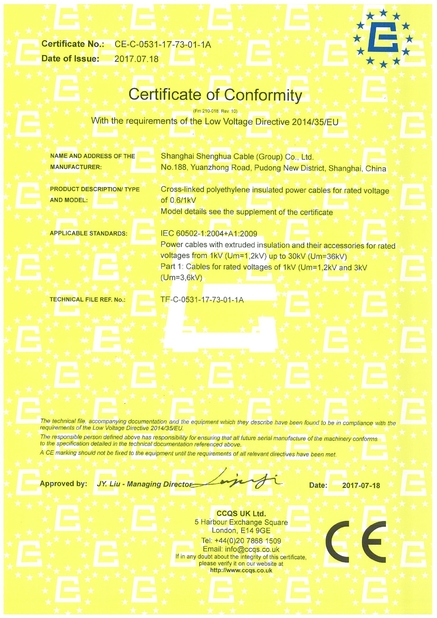
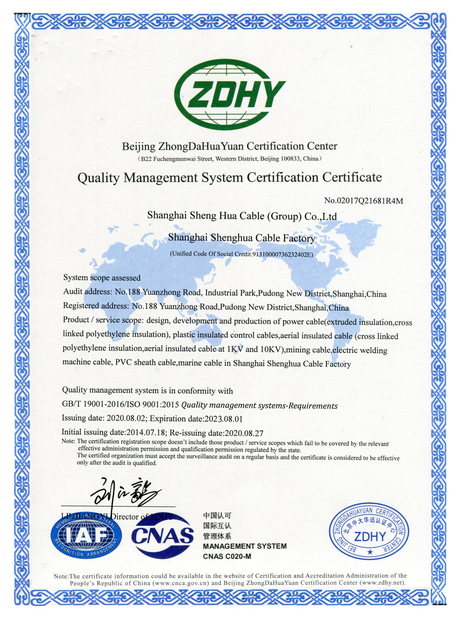
Conformità agli standard e alle certificazioni internazionali
Durata a lungo termine nei sistemi di distribuzione industriale e di potenza
Shenghua Cable offre una guida completa e supporto tecnico per il dimensionamento dei cavi specifico per progetto.
Esplora il nostro portafoglio prodotti:https://www.shanpowercable.com/
Selezionare la corretta area della sezione trasversale del cavo è più che seguire l'esperienza. Considerandocapacità di corrente a lungo termine, densità economica, caduta di tensione e stabilità termica in caso di cortocircuito, gli ingegneri possono garantire installazioni sicure, affidabili ed economiche.
Shenghua Cablecombina competenza tecnica con materiali di prima qualità per fornire soluzioni che resistono alla prova del tempo.